


Choosing a concert involves more than knowing the singer or liking a particular song. The atmosphere, instruments, vocal approach, arrangements and even the way artists connect with the audience can create a very different experience. Understanding the differences between traditional Persian, pop and fusion concerts helps you choose a performance with a clearer idea of what to expect before buying tickets.
Some listeners enjoy the deep roots of Persian singing and the sound of instruments such as the tar and santur. Others prefer singing along to familiar songs, energetic rhythms and live pop performances. Another group is drawn to new experiences: concerts that combine elements of Iranian music with modern styles and instruments.
None of these styles is inherently better than the others. Each has its own qualities, possibilities and audience. This guide explores the main differences between traditional, pop and fusion concerts so you can decide according to your taste, preferred atmosphere and expectations of a live performance.
What is the difference between traditional Persian, pop and fusion concerts?
The most significant differences lie in their musical language, performance approach, arrangements and the experience they offer listeners. Traditional Iranian music is usually associated with the radif repertoire, dastgah modal systems, Persian vocal traditions and Iranian instruments. Pop places greater emphasis on songs, accessible melodies and arrangements that appeal to a broad audience. Fusion grows from a deliberate combination of elements from two or more musical traditions or styles.
These boundaries are not always clear-cut. A traditional performance may feature fresh arrangements, a pop concert may include Iranian instruments, and a fusion group may perform passages with a distinctly traditional character. To understand a concert more accurately, pay attention to the music and how it is presented rather than relying only on its genre label.
Differences in instruments and sound
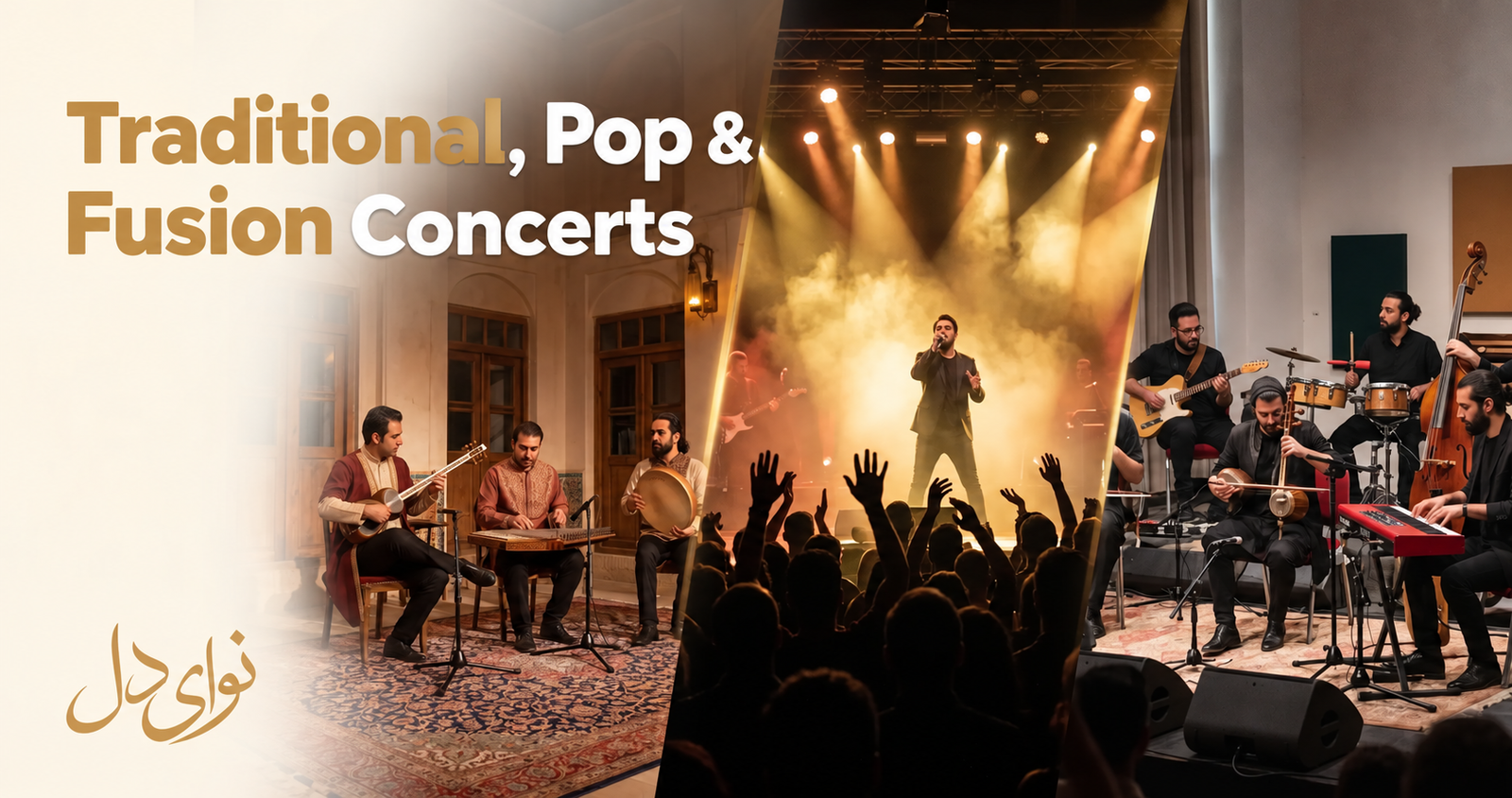
In many traditional Persian concerts, instruments such as the tar, setar, santur, kamancheh, ney and tombak play an important role. The singing and instrumental techniques can draw attention to melodic detail, musical phrasing and changes in rhythm.
Depending on the artist’s style, pop concerts may feature guitar, piano, keyboards, bass guitar, drums and electronic instruments. Arrangements often make the melody and lyrics clear and easy to follow, although pop instrumentation and sound vary widely.
Fusion music can bring traditional and modern instruments together. Combining a setar with electric guitar, for example, or Iranian percussion with modern arrangements can create a distinctive sound. Simply including different kinds of instruments does not make a work fusion; the way its musical elements interact and form a coherent artistic expression matters more.
Differences in singing and performance
In much of traditional Iranian music, singing draws on vocal nuances, tahrir ornamentation, gusheh melodic forms and distinctive phrasing. In some performances, improvisation and the interaction between musicians are also central to the listening experience.
In pop music, singers generally perform familiar songs with arrangements adapted for the stage. Direct interaction with the audience, singing along and changes to arrangements or the running order may all be part of the programme.
In a fusion concert, the vocal approach depends on the styles being combined. Persian singing might be set against rock, jazz or electronic music, or a singer might use different techniques in different sections of a piece. The genre is highly diverse, so no single performance model applies to every fusion concert.
Traditional Persian concerts: musical roots and subtle detail
For many listeners, a traditional Persian concert offers a live connection with part of Iran’s musical heritage. Musicianship, vocal character, the relationship between instruments and melodic detail may take precedence over visual spectacle or high-energy rhythms.
Traditional music should not, however, be reduced to quiet, formal performances intended only for specialists. Some programmes invite reflection; others create a dynamic experience through livelier rhythms, larger ensembles or a combination of vocal and instrumental sections. The character of a performance depends on the artists, repertoire and group’s approach.
Common instruments in traditional Persian concerts
Iranian instruments each have their own tonal character and capabilities. The tar and setar can produce delicate, detailed melodic phrases. The santur’s clear, resonant sound is heard in many Persian ensembles. The kamancheh can give melodies a vocal quality, while the ney has a distinctive timbre that makes it an important voice in certain traditional combinations.
The tombak and other percussion instruments help shape the music’s pulse and movement. Not every concert needs to include all of these instruments: an ensemble may range from an intimate duo to a much larger group.
What roles do radif, dastgah and improvisation play?
In parts of Iran’s classical modal tradition, established melodic structures and the gusheh associated with different dastgah and avaz systems help shape a performance. Understanding these concepts can deepen an interested listener’s experience, but specialist knowledge is not a prerequisite for enjoying a traditional concert.
Improvisation is important in some performances. Within the work’s musical language, a musician may create new phrases or develop a melody in response to another player. As a result, two performances of the same piece may offer quite different experiences.
What is the atmosphere like at a traditional Persian concert?
The atmosphere depends on the programme. A small ensemble in an intimate venue may let you hear fine instrumental and vocal details, while a larger ensemble can create a more exuberant experience. Before buying tickets, find out about the performers, the programme and the venue.
If you enjoy Iranian music, instrumental nuance, singing and discovering melodic detail, a traditional concert may suit you. If you are new to the style, consider starting with a performance that provides clear information about its artists and repertoire.
Pop concerts: familiar songs and a direct audience connection
Pop concerts are a familiar form of live performance in which songs, melodies and the singer’s connection with the audience often play a prominent role. Listeners may hear tracks they already know from official releases or other media. That familiarity can make singing along and participating in a live show particularly enjoyable.
Pop concerts do not all share the same energy, instrumentation or format. Some focus on rhythmic songs and a lively atmosphere; others feature gentler songs, acoustic performances or minimal arrangements. Knowing the artist’s style and likely repertoire helps you choose a suitable show.
Music and arrangements at pop concerts
Melody and lyrics often play an important role in connecting pop music with listeners. Arrangements can use live instruments, electronic sounds or both. On stage, songs may differ from their released versions to suit the venue and the musicians performing them.
Some singers work with a live band, while others combine parts of the arrangement with electronic equipment or prerecorded sounds. This alone does not determine quality. What matters is the final performance, the group’s coordination and whether the approach suits the artist’s music.
Lighting, stage design and audience interaction
At many pop concerts, stage design, lighting and visuals help establish the atmosphere. The singer may speak between songs, invite the audience to sing along or devote part of the programme to popular tracks. The extent of these elements varies, and they should not be treated as fixed features of every pop performance.
If you enjoy being part of a crowd, hearing familiar songs and participating in a performance, a pop concert may meet your expectations. To choose well, look beyond the singer’s name to the style of the songs, the performing ensemble, the venue and the official programme information.
What should you check before buying pop concert tickets?
- Artist and performance style: Check that the music suits your taste.
- Date and venue: Consider the performance time, venue address and transport options.
- Ticket price and seating: Compare the available options with your budget and preferred view.
- Official event information: Check programme details and entry requirements through a reliable source.
- Purchase conditions: Read the cancellation, programme change and refund rules before paying.
To explore forthcoming programmes, visit Navaye Del upcoming shows.
1. What is the main difference between traditional Persian, pop and fusion concerts?
The main differences are musical language, instrumentation and performance approach. Traditional Iranian music usually draws on Iranian instruments and musical structures, singing and melodic detail. Pop often focuses on songs, accessible melodies and a direct connection with the audience. Fusion combines elements of two or more styles to create a new musical expression.
2. Which type of concert should I choose for my first visit?
The best choice depends on your taste and expectations. If you enjoy familiar songs and a lively atmosphere, a pop concert may suit you. If you are interested in Iranian instruments, singing and musical nuance, explore a traditional performance. If different combinations of sounds and styles appeal to you, consider a fusion concert.
3. Is traditional Persian music always quiet and restrained?
No. Traditional Iranian music has considerable rhythmic and performance diversity. Some concerts are calm and reflective, while others feature lively rhythms, ensemble playing and exuberant passages. The final atmosphere depends on the repertoire, the ensemble and the artists’ approach.
4. What exactly does fusion music mean?
Fusion describes music that combines elements of two or more musical traditions or styles. A group might, for example, bring Iranian instruments together with rock, jazz or electronic arrangements. Fusion involves more than placing different instruments side by side: their interaction and the coherence of the resulting work also matter.
5. Do pop concerts feature only famous songs?
Not necessarily. The repertoire depends on the artist and that particular programme. A concert may include familiar songs, new material or different arrangements of earlier work. Check the official event information for details.
6. Do I need to understand Iranian music to enjoy a traditional concert?
No. Familiarity with dastgah systems, radif and Iranian instruments can deepen your understanding, but it is not necessary to enjoy a performance. Listening to the group or singer beforehand and reading the programme information can enrich the experience.
7. What should I consider when buying concert tickets?
Before paying, check the artist, performance style, date and time, venue, ticket price and selected seats. Read the entry requirements, any restrictions and cancellation or refund rules. Using the event’s official ticketing channel also helps reduce the risk of buying an invalid ticket.
8. Where can I find Navaye Del’s upcoming shows?
Visit Navaye Del’s Upcoming Shows page for event information and forthcoming programmes. Read each event’s current details before making plans or purchasing tickets.
Fusion music: connecting tradition with new experiences
Fusion offers space to explore different sounds and ideas. Artists can combine elements of traditional Iranian music with rock, jazz, pop or electronic music. The outcome varies: sometimes Iranian instruments remain at the centre, while elsewhere modern rhythms and arrangements take a more prominent role.
Fusion is more than using several different instruments at once. A work develops a clearer identity when its elements connect purposefully and create a coherent musical expression.
For listeners seeking an alternative to familiar concert formats, a fusion performance can introduce new sounds and combinations. Whether it suits an individual’s taste depends on the group, its arrangements and the pieces performed.
Features of fusion concerts
Traditional and modern instruments together
One notable possibility in fusion music is bringing a wide range of instruments into one work. A tar or setar might be heard alongside electric guitar, piano, drums or electronic instruments. Each can contribute differently to the melody, rhythm or overall musical atmosphere.
Instrumentation alone does not determine a musical style. The arrangement, the relationship between musical sections and the group’s artistic approach also help establish a work’s fusion identity.
Variety in rhythm and atmosphere
Fusion concerts can differ greatly in rhythm, volume and mood. Some are gentle and melodic, while others feature driving rhythms and energetic arrangements.
Given this diversity, listening to several tracks by the group or artist before buying tickets is useful. It helps you decide whether the performance’s music matches your taste and expectations.
A different listening experience
Fusion may introduce listeners to structures that do not fit entirely within traditional or pop music. This can make the experience particularly engaging for people who enjoy discovering new genres and unusual combinations.
Fusion does not necessarily mean more complex or better music. Quality depends on the artists’ creativity, the coherence of the arrangement and how well the musical components work together.
Comparing traditional Persian, pop and fusion concerts
To make an informed choice, compare the three styles from several perspectives. The following table describes common differences, while recognising that individual concerts may have different qualities.
| Comparison | Traditional Persian music | Pop music | Fusion music |
|---|---|---|---|
| Defining feature | Draws on Iranian musical traditions and structures | Songs and accessible melodies | Purposeful combination of elements from different styles |
| Common instruments | Tar, setar, santur, kamancheh and ney | Guitar, piano, keyboards, drums and electronic instruments | Varied combinations of traditional and modern instruments |
| Performance approach | Singing, ensemble playing and sometimes improvisation | Songs and a direct connection with the audience | Depends on the group’s style and artistic approach |
| Concert atmosphere | From calm and reflective to lively | From gentle and acoustic to energetic | Varies with the combination of styles |
| May suit | Listeners interested in Iranian music and vocal and instrumental detail | Listeners who enjoy songs and stage performances | Listeners seeking different musical experiences |
| Before buying tickets | Check the ensemble, performance format and repertoire | Check the singer’s style and programme details | Listen to samples to understand the musical atmosphere |
This comparison shows why no single style is the best choice for everyone. A good decision matches the performance’s qualities with the listener’s taste, expectations and circumstances.
How to choose a concert that suits your taste
Choosing a concert involves more than a singer’s popularity or the ticket price. Before buying, find out enough about the music, the atmosphere and the programme.
1. Consider the music you usually listen to
If you are drawn to Persian singing, traditional instruments and melodic detail, traditional concerts can be a good starting point. If you usually listen to pop and want to hear familiar songs live, a pop concert may be a closer match.
If you enjoy combinations of genres and want to try something new, explore fusion groups too. Listening to a few tracks before buying tickets is a simple way to become familiar with an artist’s musical world.
2. Decide what kind of atmosphere you want
Some listeners prefer to focus closely on sound and musicianship; others enjoy singing along, lively rhythms and interacting with a crowd. These different expectations can influence your choice.
Do not assume every traditional concert is quiet or every pop concert is high-energy. Official event descriptions and samples of the artist’s work offer more reliable clues to the atmosphere.
3. Consider your budget and seating
Ticket price and seating are important factors. When comparing options, look beyond the cost to the seat’s position, venue capacity, travel time and the performance schedule.
Set a budget first, then choose from the available shows according to both the music and the practicalities of attending.
4. Check official concert information
Before paying, verify the artist, date, time, venue and entry requirements. Make sure you are using the official ticketing channel for that event and understand the cancellation or refund conditions.
Explore Navaye Del upcoming shows for forthcoming programmes.
Common mistakes when choosing a concert
Sometimes people buy tickets based only on an artist’s name or other people’s opinions and overlook the programme details. Avoid these common mistakes to make a better choice:
- Choosing only by popularity: A famous artist does not necessarily perform music that suits your taste.
- Ignoring programme details: Check the announced date, time, venue and performance format before buying.
- Overlooking seating: Seat position and sightlines can affect your concert experience.
- Buying from unreliable sources: Use the event’s official ticketing channel to reduce the risk of receiving an invalid ticket.
- Ignoring cancellation and refund terms: Read the rules on programme changes and refunds before paying.
- Choosing without knowing the music: Listening to the artist’s work helps you form realistic expectations.
Which concert is right for you?
The differences between traditional Persian, pop and fusion concerts extend beyond instruments and genre labels. Performance approach, repertoire, arrangements and the audience’s experience in the venue also matter.
Traditional Persian music offers a chance to hear the subtleties of Iranian instruments and singing. Pop concerts appeal to those who enjoy familiar songs and a direct connection with the singer. Fusion introduces fresh combinations and different musical experiences.
For a better choice, consider your musical taste, listen to the artist’s work and check the event details. Then choose suitable tickets within your budget and practical circumstances. Ultimately, the best concert is the one that matches your interests and expectations.
Follow Navaye Del’s upcoming shows
If you are planning to attend a live performance, visit Navaye Del upcoming shows for programme and event information. Read each show’s details carefully before buying tickets to make an informed choice.
Understanding different musical styles and checking each event’s information can help you choose a concert that suits your taste and enjoy live music.